Conn Valley Estates: A Quiet Corner Of Napa Valley
May 14, 2026
May 14, 2026
Looking for a quieter side of Napa Valley? If you love the idea of space, privacy, and a more rural Wine Country setting, Conn Valley may deserve a closer look. This area is not about walkable blocks or town-center energy. It is about land, retreat-like surroundings, and the kind of ownership that rewards careful due diligence. Let’s dive in.
Conn Valley is best understood as a rural estate corridor in Napa County’s unincorporated area, not a conventional subdivision. County materials place it around Conn Valley Road, Rossi Road, Greenfield Road, and Greenfield Way, south of Old Howell Mountain Road.
That distinction matters when you shop for property here. In unincorporated Napa County, county agencies handle core issues like roads, wells, septic, and land-use review rather than a city government. For you as a buyer, that often means more land and more privacy, but also more property-specific homework.
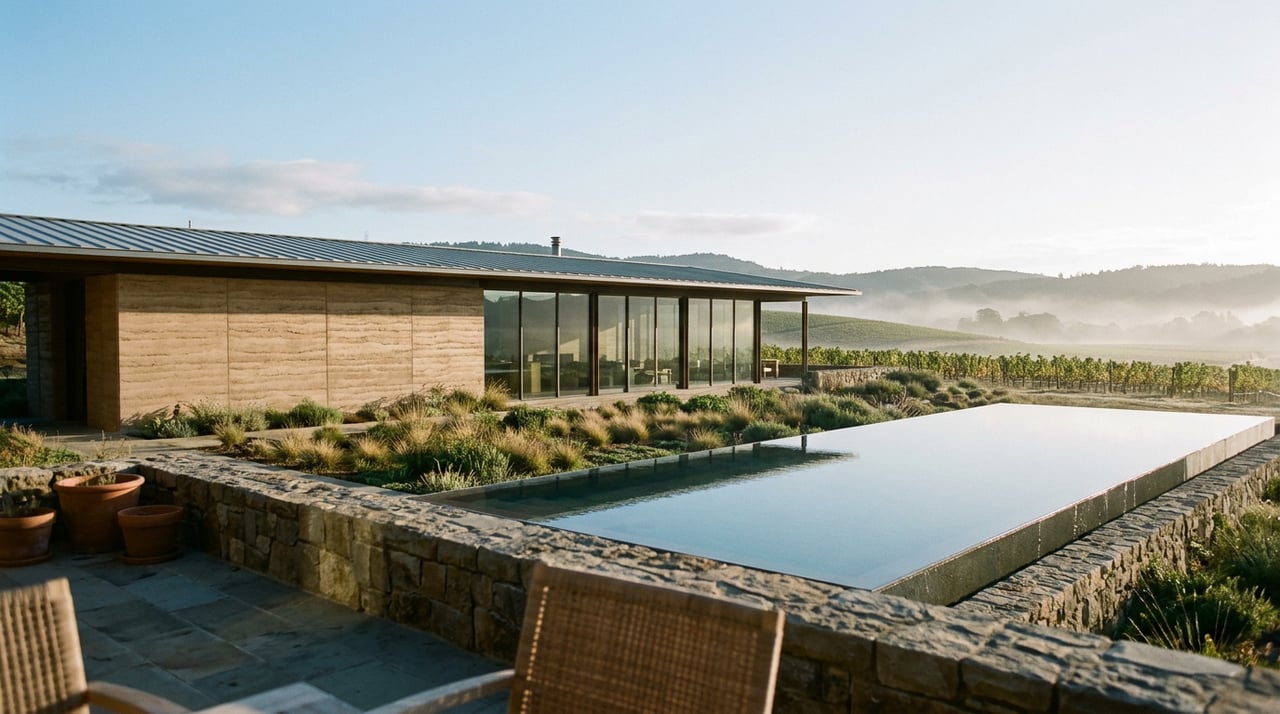
County planning materials describe the corridor as wooded, serene, and opening toward the north access of Lake Hennessey. The setting is one reason buyers are drawn here. Conn Valley tends to feel tucked away, with a calmer, more secluded character than Napa or St. Helena.
That atmosphere is not just about aesthetics. It also reflects the area's rural land pattern, lower density, and estate-style ownership. If you want a property that feels like a retreat, Conn Valley often fits that goal better than a more built-up in-town location.
Public planning records show nearby uses in the area include single-family homes, vineyards, and a small number of producing wineries. Parcel sizes in county reviews have ranged from roughly 1 to 143 acres in one case and 2 to 450 acres in another.
In practical terms, that points to a market shaped by large-lot rural residential properties, vineyard-oriented holdings, and winery-adjacent land. You are generally not looking at compact neighborhood housing here. You are looking at land that may carry lifestyle, agricultural, or long-term estate value.
Terrain in Conn Valley can vary quite a bit. County project descriptions reference hills descending toward Conn Creek, along with vineyards, grasses, brush, and sparse oak trees.
For buyers, that usually means you should evaluate several factors together. Views, privacy, drainage, slope, and grading potential are often closely connected on rural parcels. A beautiful homesite may also come with engineering, access, or land-use considerations that deserve early review.
If you are deciding between Conn Valley and a more central location, the tradeoff is fairly clear. St. Helena had a population of 5,430 in the 2020 Census, while Napa had 79,246 residents and offers a broader town environment.
Napa describes itself as the county seat and highlights hospitality, dining, hotels, and restaurant districts. By contrast, Conn Valley offers a more secluded experience shaped by land and distance rather than town-center convenience.
Here is the simplest way to think about it:
Neither option is inherently better. It depends on whether you want quick access to amenities or a quieter property with room to breathe.
In Conn Valley, due diligence is not a box to check at the end. It is part of understanding the property from the start. Rural Napa County ownership often involves more moving pieces than an in-town home purchase.
That does not mean the area is difficult. It means the value of a property may depend on issues that are specific to the land itself. Access, water, wastewater, slope, and fire planning can all shape how you use the property and what improvements may be realistic.
Road access is a major practical issue in rural ownership. Napa County’s Roads Division maintains about 450 miles of public roads, 79 bridges, and 50 major drainage structures in the unincorporated county.
The county’s 2025 to 2030 road plan includes partial paving of Conn Valley Road and a proposed $5 million replacement of the Conn Valley Road bridge over Conn Creek. For you, that is a reminder to look closely at how a property is reached, what road conditions are like, and whether access affects long-term usability.
Water and wastewater are usually parcel-level matters in this part of Napa County. County Environmental Health regulates wells, septic systems, alternative sewage treatment, and winery wastewater systems in the unincorporated county.
The Napa Valley Subbasin is also identified as a high-priority SGMA basin with more than 2,600 wells. That is why buyers should check water source, water reliability, and septic capacity early in the process, especially before making plans for expansion, planting, or new construction.
If you are considering acreage for vineyard use or future planting, slope and creek proximity can be major filters. Napa County requires an engineered Erosion Control Plan and Approval for new vineyards on slopes over 5%.
County rules also include stream setbacks and added protections in sensitive watersheds. In other words, not every attractive parcel is equally straightforward from a vineyard-development perspective. A property may have strong appeal but still require careful analysis before you assume plantable acreage.
Some buyers look at Conn Valley through the lens of long-term winery or micro-winery potential. County planning documents show that winery uses are permit-based, which makes entitlement review an important part of the conversation.
Napa County’s micro-winery ordinance allows 201 to 5,000 gallons produced on-site, limited tastings, and related access-road improvements. That can create opportunity for the right parcel, but only after confirming what the county will allow for that specific property.
Fire planning belongs near the top of your checklist in a rural area like Conn Valley. Napa County has 2025 Fire Hazard Severity Zone maps, and if a parcel falls within a high or very high zone, a compliant defensible-space inspection is required at sale under AB 38.
The key point is simple: do not assume a rural estate is exempt. Verify the parcel’s mapping and understand what that may mean for ownership, maintenance, and transaction timing.
Conn Valley tends to appeal to a specific type of buyer. It is often a strong fit if you want privacy, acreage, vineyard-adjacent surroundings, and a setting that feels removed from the busier parts of the valley.
It can also make sense for buyers who are comfortable evaluating land complexity as part of the purchase. That includes estate buyers, vineyard owners, and others who understand that access, water, septic, slope, fire, and permits are not side issues here. They are part of the property's real value.
If Conn Valley is on your radar, start with questions that match the area’s realities. In a rural market, the right early questions can save time and sharpen your decision-making.
Consider focusing on:
These are the kinds of questions that help you move beyond first impressions. In a place like Conn Valley, the beauty of the land and the realities of the land should always be evaluated together.
Conn Valley is not for everyone, and that is exactly why it stands out. If you want immediate access to shops, restaurants, and walkable streets, you may prefer Napa or St. Helena. But if your vision of Napa Valley includes a long drive through a wooded corridor, open land, and a more private sense of place, Conn Valley offers something harder to find.
For the right buyer, that quiet character is the point. It is a part of Napa County where land, setting, and long-view ownership tend to matter more than convenience. And when you understand the practical details behind the scenery, you can evaluate the opportunity with much more confidence.
If you are considering a rural estate, land, or vineyard-oriented property in Napa Valley, working with a team that understands wells, septic, slope, access, and land-use nuance can make the process much clearer. Connect with Jeff Earl Warren to explore Conn Valley and other distinctive Napa County properties.
Stay up to date on the latest real estate trends.

How to Handle Contingencies in Your Oakville Real Estate Process.

Where to Brunch in Yountville to Slow Down Your Day.

Questions on Real Estate We Hear Regularly in Yountville.
Home Improvements to Consider Before You List in Oakville.
Get assistance in determining current property value, crafting a competitive offer, writing and negotiating a contract, and much more. Contact us today.