Pope Valley Land And Vineyard Potential Explained
May 28, 2026
May 28, 2026
If you are looking at land in Pope Valley, the headline number on the listing sheet is only the beginning. In this part of Napa County, value often comes down to what the land can actually support, how much of it is truly usable, and what county rules allow you to do with it. If you want to understand vineyard upside, rural hold value, or long-term agricultural potential, a closer look matters. Let’s dive in.
Pope Valley is not the Napa Valley floor. Napa County describes it as an interior valley that runs roughly 10 miles long and up to 2.5 miles wide, with a valley floor near 700 feet and ridgelines that can rise to about 1,600 to 1,900 feet.
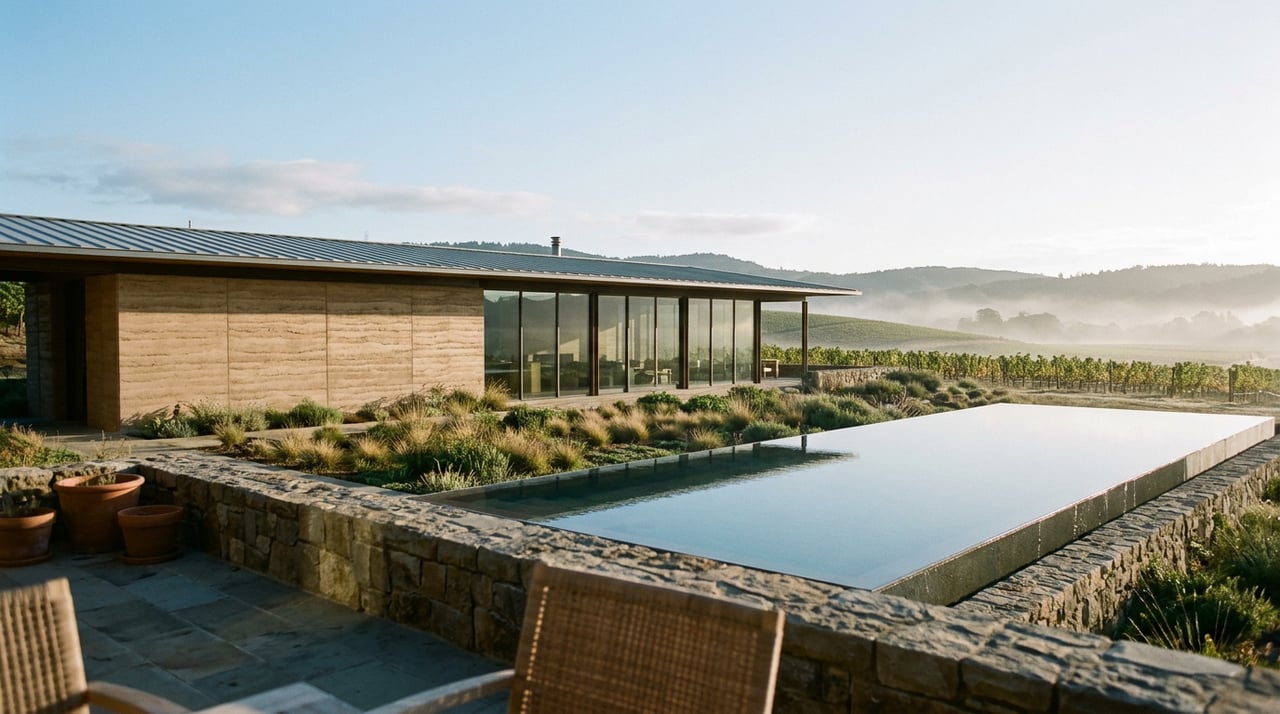
That geography shapes how land works here. Pope Creek drains southeast through a canyon toward Lake Berryessa, and the area remains overwhelmingly rural in character. County land-use data describe Pope Valley as mostly Rural Lands, farming and grazing, and parks or open space, with very little residential development.
For buyers and investors, that rural setting is a major part of the appeal. Napa County’s planning framework directs most housing and commercial growth to incorporated or urbanized areas, while agriculture remains the primary land use in rural areas. In practical terms, Pope Valley is usually more compelling as agricultural land, ranch land, or a long-term rural hold than as a subdivision play.
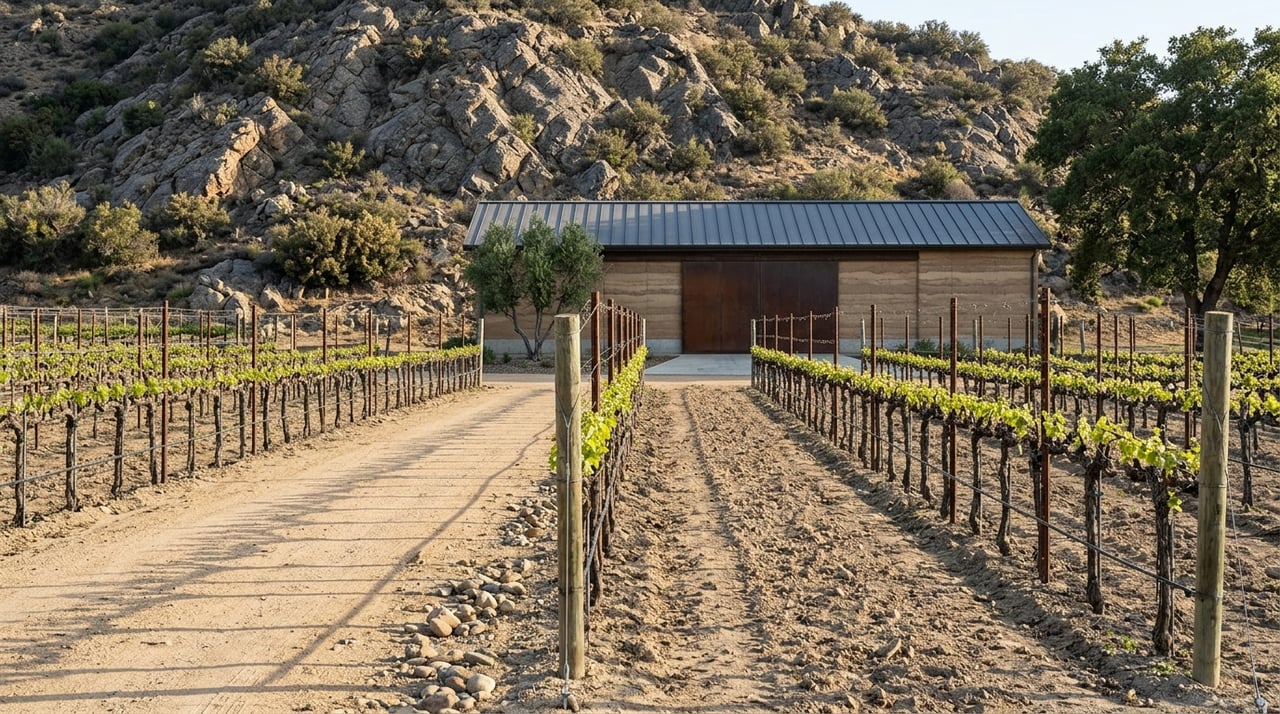
In Pope Valley, vineyard potential is not a yes-or-no question. It is a parcel-specific mix of soils, slope, drainage, water, access, and regulation.
That matters because two properties with the same gross acreage can have very different outcomes. One may offer meaningful plantable area with workable infrastructure, while another may lose usable acreage to topography, roads, drainage patterns, or environmental constraints.
According to UC ANR, vineyard site capacity is driven mainly by soils and microclimate, and each foothill parcel needs individual evaluation. Grapes generally perform best on well-drained soils, while poor drainage should be avoided.
In Pope Valley, Napa County identifies the principal soil series as Bressa-Dibble-Sobrante. That does not mean every acre will perform the same way. Soil texture, depth, fertility, chemistry, and water availability can vary enough that rootstock and site planning need to match the land rather than the other way around.
A large parcel may look impressive on paper, but gross acreage is not the same as plantable acreage. Napa County warns that flatter pockets on steeper terrain should be evaluated carefully because interior-valley slopes can carry landslide and erosion risk.
The county also requires erosion-control plans for agricultural grading or earthmoving on slopes over 5%. Once you account for roads, drainage, slope limitations, and conservation considerations, the number of acres that can actually be planted may be much smaller than the total parcel size.
Not all Pope Valley land offers the same agricultural utility. A parcel that sits mostly on the valley floor may evaluate very differently than one with significant hillside or upland acreage.
That difference can affect planting options, development costs, access planning, and water assumptions. When you evaluate land here, one of the first questions to ask is simple: how much of this property is truly usable for the goal you have in mind?
In rural Napa County, water is never just a background detail. In Pope Valley, it can be one of the most important factors in determining whether a parcel has real vineyard upside.
Pope Valley has its own California Department of Water Resources designated groundwater basin. DWR describes it as a valley-floor system surrounded by Coast Range mountains, with alluvial materials made mainly of silty to clayey sands and gravels.
DWR reports that, under an assumed specific yield of 3%, many wells in the basin yield less than 100 gallons per minute. That is a useful regional benchmark, but it should not be treated as a parcel guarantee.
For a buyer, the practical takeaway is that Pope Valley is not a uniform water market. Groundwater conditions may be more favorable near thicker alluvium and the valley floor than on higher or more consolidated upland sites, but that still needs to be verified with parcel-level well and soil information.
Napa County’s groundwater reporting indicates that limited Pope Valley monitoring showed groundwater levels around 3 to 35 feet below ground surface, with seasonal fluctuations of roughly 10 to 15 feet. Water quality appears generally good, though elevated iron and manganese can occur.
That means a parcel review should look beyond the simple question of whether a well exists. You also want to understand pumping rate, seasonal behavior, and water quality for the property you are considering.
In Pope Valley, land value is tied closely to Napa County’s agricultural preservation framework. This is one reason local knowledge matters so much in rural transactions.
The county’s General Plan emphasizes agriculture preservation, open space protection, water-resource protection, and sustainable vineyard practices. It also reinforces large minimum parcel sizes in agricultural areas, which supports the area’s long-term rural pattern.
Napa County states that parcels generally must be zoned Agriculture Preserve or Agricultural Watershed and meet minimum size and bona fide agricultural use requirements to qualify for a Williamson Act contract. For qualifying property, that can reduce property tax assessment relative to unrestricted market value.
This is an important point for buyers looking at long-term agricultural ownership. A parcel’s zoning, contract status, and actual agricultural use can all affect how you evaluate carrying costs and future strategy.
If vineyard development requires grading or earthmoving on slopes over 5%, Napa County requires an erosion-control plan, and the review is subject to CEQA. The county framework also calls for preserving oak trees and other significant vegetation where feasible and avoiding net loss of sensitive habitat where possible.
In real terms, this means development timing, cost, and plantable layout can be shaped by more than just the map lines on a brochure. The regulatory path is part of the property itself.
Many buyers assume a Napa County address answers the appellation question. In Pope Valley, that assumption can create confusion.
TTB’s Napa Valley AVA list includes several named sub-AVAs, but Pope Valley is not listed as one of the named Napa Valley sub-AVAs in the source material provided. The safest approach is to check appellation status parcel by parcel rather than infer it from a Pope Valley mailing address.
For vineyard-minded buyers, that distinction matters. If branding, grape sourcing identity, or future wine program goals are part of your plan, appellation review should happen early.
Pope Valley’s long-term appeal comes from its scale, agricultural continuity, and scarcity. County land-use data show the area remains largely rural and agricultural, and county planning policy continues to direct development pressure away from agricultural lands.
That does not mean every parcel is equal. The strongest long-term hold stories usually depend on a practical combination of usable acreage, dependable access, workable water, and realistic agricultural optionality.
On rural land, access affects how a property functions. UC ANR recommends keeping maps of roads, access points, gates, water sources, septic systems, and similar infrastructure, and notes that first responders may need more time to reach properties depending on location and access.
For that reason, road condition, gate placement, and turnaround space are not minor details. They can influence daily use, emergency planning, and the broader feasibility of vineyard or ranch operations.
One of Pope Valley’s strongest value themes is optionality. A parcel may serve as a rural retreat, a ranch holding, a vineyard candidate, or a long-hold agricultural asset, but only if the physical and regulatory facts support those uses.
That is why serious buyers tend to look past the romance of acreage alone. The goal is to understand what the land can do now, what it may support later, and what constraints come with both.
If you are comparing Pope Valley land, these are some of the most useful questions to ask early:
These questions help separate attractive marketing language from real land utility. In a market like Pope Valley, that difference can be substantial.
Pope Valley can offer compelling land and vineyard potential, but the opportunity is rarely simple. The best outcomes come from understanding the relationship between topography, soils, water, access, agricultural rules, and realistic usable acreage before you commit. If you are weighing a purchase, sale, or long-term hold in Napa County’s rural market, working with people who understand how land actually pencils can make all the difference.
If you want clear, experienced guidance on vineyard land, rural property, and complex Napa County real estate, connect with Jeff Earl Warren.
Stay up to date on the latest real estate trends.


How to Handle Contingencies in Your Oakville Real Estate Process.

Where to Brunch in Yountville to Slow Down Your Day.

Questions on Real Estate We Hear Regularly in Yountville.
Home Improvements to Consider Before You List in Oakville.
Get assistance in determining current property value, crafting a competitive offer, writing and negotiating a contract, and much more. Contact us today.