Howell Mountain Vineyard Estates: What Drives Their Value
June 11, 2026
June 11, 2026
If you have ever wondered why one Napa mountain estate commands attention far beyond its acreage, Howell Mountain is a strong example. Buyers are not just responding to views or prestige here. They are looking at a rare mix of appellation identity, limited plantable land, vineyard credibility, and the real cost of making steep terrain function well. Let’s dive in.
Howell Mountain is an established American Viticultural Area in Napa County. The area is widely understood as a mountain-top district on the east side of Napa Valley, with the appellation beginning around the 1,400-foot contour and vineyard plantings reaching to about 2,500 feet.
That matters because an AVA is not just a map line. The TTB defines an AVA as a delimited grape-growing region that may be used as an appellation of origin on wine labels. In plain terms, the Howell Mountain name carries both agricultural meaning and market identity.
Howell Mountain was originally recognized for traits that set it apart from the Napa Valley floor. The federal designation record pointed to elevation, distinct soils, moderate temperatures, and a pattern where the valley floor could be foggy while Howell Mountain stayed sunny.
For property value, that difference matters. Land on Howell Mountain is not simply interchangeable with lower-elevation Napa acreage because its growing conditions are part of what gives the area its reputation.
The local grower association describes Howell Mountain as a region with sun exposure above the fog line and porous, nutrient-poor soils. Those conditions can stress vines and contribute to smaller, more concentrated berries and wines known for structure and aging potential.
You do not need to be a winemaker to understand the value logic. If buyers believe a site produces a distinctive product tied to a recognized place, the land under that identity tends to be viewed differently from generic vineyard acreage.
Howell Mountain includes about 14,000 acres in total, but only about 1,500 acres are under vine, according to the local association. That gap is important because it shows how little of the broader mountain area is actually planted.
When planted acreage is limited, viable vineyard estates can become more valuable than raw acreage totals suggest. In this setting, a parcel’s usefulness often matters more than its size on paper.
In Napa County, vineyard value is built from three main parts: the land itself, non-living improvements such as trellises, stakes, irrigation, and frost protection, and the vines. The county also notes that appraisers adjust for location, size, slope, soil, and proximity to streams or rivers.
That framework is especially important on Howell Mountain. Two parcels with similar acreage can have very different value depending on what has already been improved, what can realistically be planted, and how difficult the terrain is to work with.
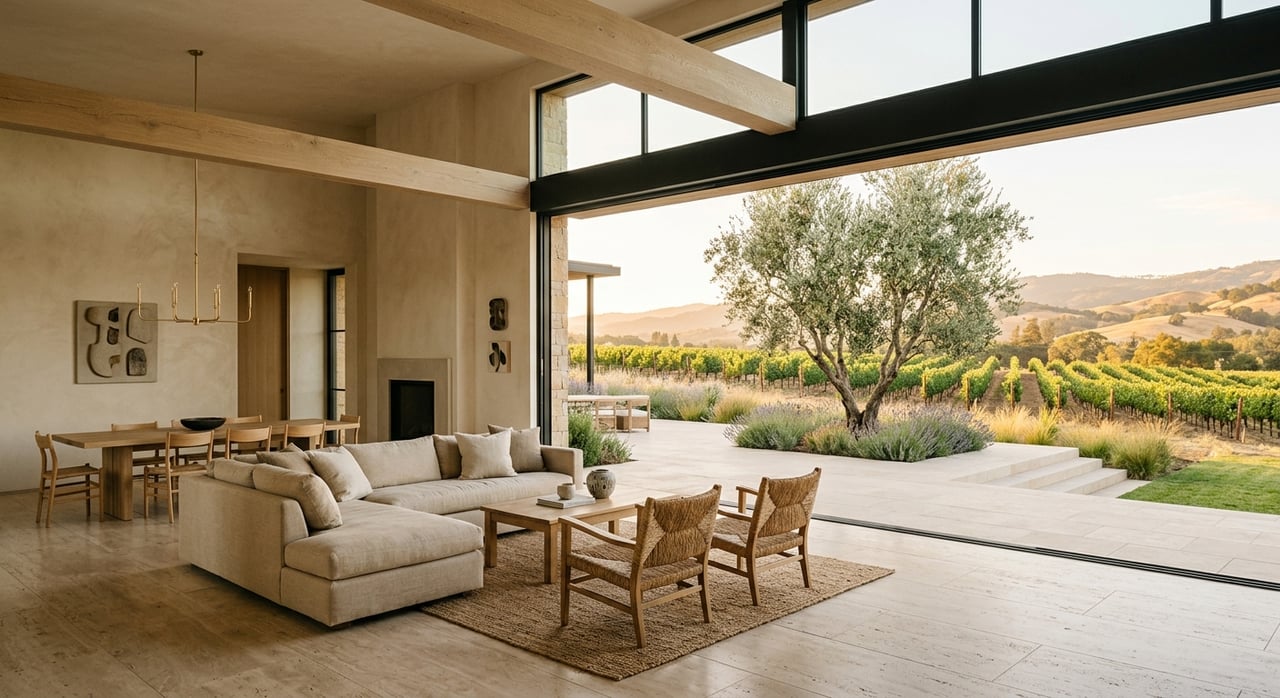
On Howell Mountain, buyers are often paying for much more than land area and panoramic views. They may be paying for productive vines, usable water, established access, site work, and improvements that would be expensive or time-consuming to recreate.
This is one of the biggest reasons mountain property values can diverge so sharply. A parcel that already functions well as a vineyard estate may carry a very different profile than one that still needs major feasibility work.
Napa County also states that an income approach may be used when a vineyard is producing. That means value can be informed not only by physical attributes, but also by the site’s actual agricultural productivity.
For a Howell Mountain estate, this adds another layer. A producing vineyard can present a different value case than a beautiful but unplanted hillside holding.
Steep, agricultural land in Napa County does not move from concept to finished estate without oversight. The county requires erosion-control plans for agricultural grading and earthmoving on slopes over 5%, including vineyard replants, and those projects are reviewed under CEQA.
That review process is part of what protects the landscape, but it also adds time, complexity, and cost. In market terms, those barriers can support the value of properties that already have functional improvements or established vineyard use.
For qualifying AP or AW zoned parcels, Napa County says Williamson Act contracts may lower property-tax assessments when acreage and bona fide agricultural-use requirements are met. While that is not relevant to every buyer, it can matter for long-term agricultural holdings.
It also signals something broader about this market. Howell Mountain value is often tied to land that is meant to remain in meaningful agricultural use, not simply land held for casual future ideas.
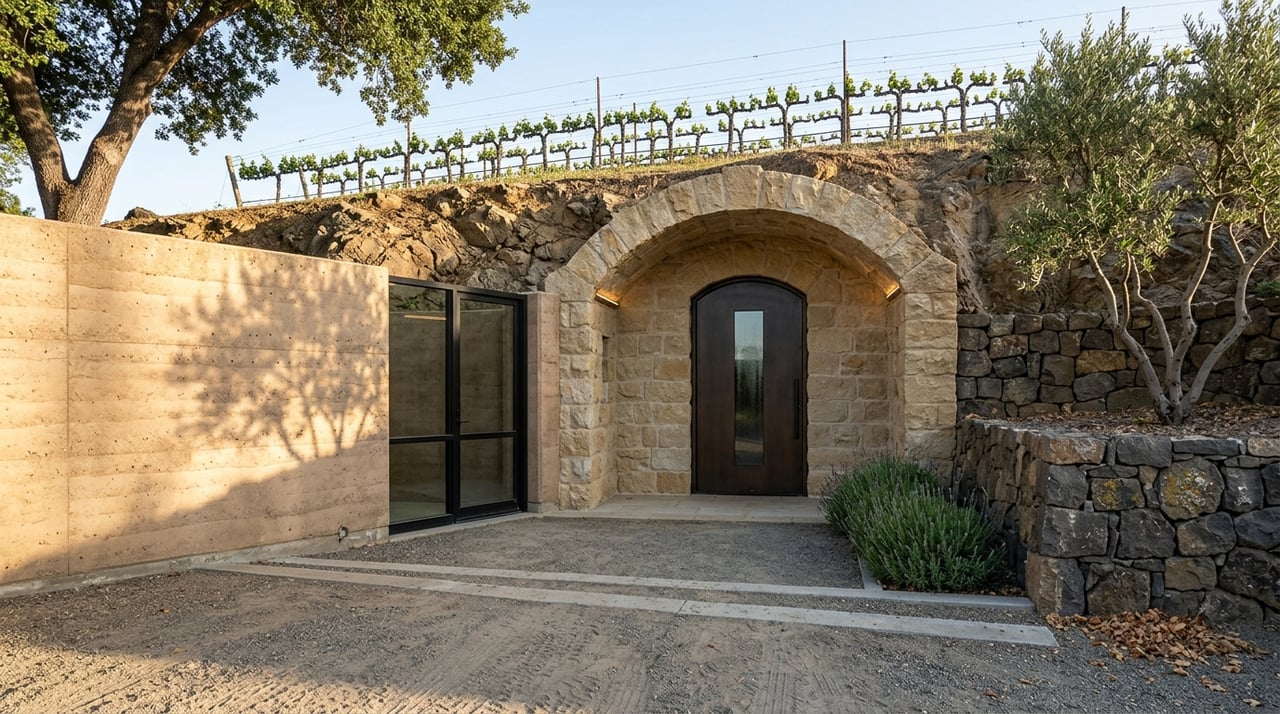
Accessory improvements can be a real part of vineyard-estate pricing in Napa County. The county states that winery caves are assessed as real property and can reduce the need to place more above-ground structures on scenic agricultural land.
The county also notes that use permits are required when caves are used for tasting rooms or wine production. With roughly 150 caves assessed in Napa County, underground improvements are not niche trivia. They can be an important part of how a luxury vineyard estate is valued and used.
A cave, trellis system, irrigation setup, internal roads, and other infrastructure can dramatically change what a property offers on day one. On steep terrain, those improvements may represent years of planning, engineering, permitting, and investment.
That is why experienced buyers tend to ask a simple question early: what exists today that would be hard to duplicate tomorrow?
There is no single standard product on Howell Mountain. Based on the area’s small planted footprint, the local mix of growers and wineries, and Napa County’s separate permitting and valuation treatment for things like caves, wells, septic systems, and erosion controls, properties here tend to fall into a few broad categories.
That variety matters for valuation because each type attracts a somewhat different buyer and diligence process.
You will often see Howell Mountain properties fit into categories like these:
A buyer comparing these property types should not assume they trade on the same logic. A view estate and a producing vineyard estate may share an address area, but their value drivers can be very different.
On Howell Mountain, value is shaped not just by reputation, but by feasibility. Napa County Environmental Health separately permits water wells, sewage systems, soil borings, and site evaluations, and those items can become central to what a property can actually support.
This is where mountain transactions become more specialized than standard residential purchases. A property can look exceptional at first glance and still require careful review to understand its real utility.
For rural and hillside property, water access and onsite wastewater capability are foundational. If you are buying a Howell Mountain estate, these are not side questions. They are core value questions.
A parcel with established, usable infrastructure may be far more attractive than one that leaves major uncertainty around well performance or septic feasibility. In mountain markets, uncertainty often affects pricing as much as beauty does.
Slope is one of the practical factors Napa County considers in vineyard valuation. It also influences engineering, erosion control, road access, planting feasibility, and the cost of future improvements.
This is why “acreage” can be misleading in a hillside setting. What is physically there is only part of the picture. What is usable, permitted, and supportable is often the bigger story.
CAL FIRE says defensible space slows fire spread and is especially important on steep slopes. On Howell Mountain, that makes fire readiness part of practical ownership, not just a seasonal checklist.
For buyers, this means the condition of access routes, vegetation management, and site planning can all matter when evaluating a property’s readiness and long-term stewardship.
No single feature explains Howell Mountain vineyard-estate value on its own. It is not just elevation. It is not just the AVA. It is not just scarcity, views, or infrastructure.
The value comes from the combination of a recognized appellation, limited planted acreage, strong Napa Valley reputation, and the complexity of making hillside land work as a home, vineyard, or both. That mix is exactly why these properties deserve careful, local analysis rather than broad assumptions.
If you are considering buying or selling on Howell Mountain, the smartest approach is to look past surface appeal and study the land from the ground up. That means understanding what is legally allowed, physically feasible, already improved, and genuinely difficult to replicate. If you want experienced guidance on complex Napa Valley land, vineyard, and estate property, connect with Jeff Earl Warren.
Stay up to date on the latest real estate trends.


Get assistance in determining current property value, crafting a competitive offer, writing and negotiating a contract, and much more. Contact us today.